 When Neandertals migrated to open areas, they built
structures out of wood, mammoth bone, and animal skins. Evidence of this exists
in the Ukraine, where ten sites contained the remains of mammoth structures.
They were made of branch frameworks of to thirty-feet long, by twenty-three-feet
wide, and ten-feet high, covered with skins, and weighed down by scavenged
mammoth bones (Lambert and the Diagram Group 1987). One of these sites,
Molodova, on the Dnestr River, contained many occupation levels with numerous
hearths and a windbreak created by mammoth bones. At Molodova 1, an oval
arrangement of mammoth bones once stood as shelter, enclosing an area of much
occupational debris, including flint, fauna, hearths, and red ocher.
Furthermore, the site of Molodova V has a slightly smaller and less conclusively
patterned arrangement of mammoth bones with a preserved dwelling roofed by
reindeer antlers, which were presumably covered with animal skins (Johanson and
Edgar 1996).
When Neandertals migrated to open areas, they built
structures out of wood, mammoth bone, and animal skins. Evidence of this exists
in the Ukraine, where ten sites contained the remains of mammoth structures.
They were made of branch frameworks of to thirty-feet long, by twenty-three-feet
wide, and ten-feet high, covered with skins, and weighed down by scavenged
mammoth bones (Lambert and the Diagram Group 1987). One of these sites,
Molodova, on the Dnestr River, contained many occupation levels with numerous
hearths and a windbreak created by mammoth bones. At Molodova 1, an oval
arrangement of mammoth bones once stood as shelter, enclosing an area of much
occupational debris, including flint, fauna, hearths, and red ocher.
Furthermore, the site of Molodova V has a slightly smaller and less conclusively
patterned arrangement of mammoth bones with a preserved dwelling roofed by
reindeer antlers, which were presumably covered with animal skins (Johanson and
Edgar 1996).
Apart from making structures out of mammoth bones,
Neandertals also made tents out of wood and animals skins. An example of this is
at the French site of Terre Amata, which is 400,000 years old. These huts were
extremely large, measuring to up to about twenty-five feet long and more than
twelve feet wide (Tattersall 1995). In the inside of the hut, archaeologists
found a fireplace, a hearth, numerous stone tools, and broken animal bones. Very
few of the fauna found suggested that perhaps this could have been a butchering
site.
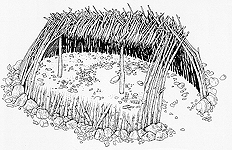
Above is what the hut at Terre Amata looked like
when excavated. It is still highly debatable whether or not skins were used to
waterproof it.
Neandertals also built structures within their
caves. At Bruniquel, in southern France, "several hundred meters from the cave
entrance is a complex quadrilateral structure constructed from stalactite and
stalagmite," dating back to 47,600 years ago. This was recently discovered along
with burnt bear bones (Balter 1996:449). Not much is known on this finding yet,
but it is hoped that it will shed new light on Neandertal communication and use
of fire.